Hyrule Warriors: Age of Imprisonment is, without a doubt, a very competent game. On a technical level, it’s genuinely impressive. Even with hundreds of enemies flooding the screen at once, I never experienced noticeable frame drops. The performance is incredibly smooth, and compared to the previous Nintendo Switch entry in the series, the difference is night and day. It feels stable, polished, and satisfying to play moment-to-moment in a way that this kind of large-scale action game really needs.
And at its core, I did enjoy it.
The gameplay is fun—simple as that. There’s a satisfying rhythm to the combat, and it’s the kind of game I can easily see myself returning to from time to time just to slowly chip away at completion. It doesn’t demand full attention in a stressful way; it just lets you play, and that’s something it does well.
However, once you move beyond the technical polish and moment-to-moment combat, the game starts to show its weaknesses, and compared to its predecessor, it feels like a step back in almost every other aspect.
The story is, at best, fine. At worst, it feels rushed and strangely stitched together with events already established in Tears of the Kingdom. Instead of expanding the lore in a natural way, it often feels like it’s trying to awkwardly connect dots we already understood, but without the space or pacing needed to make those connections feel meaningful.
It’s also surprisingly short, and perhaps more disappointing than that is where it chooses to end. The game stops at the defeat of Ganondorf, which is acceptable on paper, but it feels abrupt. The emotional weight that could have been explored afterward, especially regarding Zelda’s fate and resolution, is left completely untouched.
And that leads into one of my biggest frustrations: the emotional payoff simply isn’t there. The most important character moments are either underplayed or not shown at all.
Characters & Roster
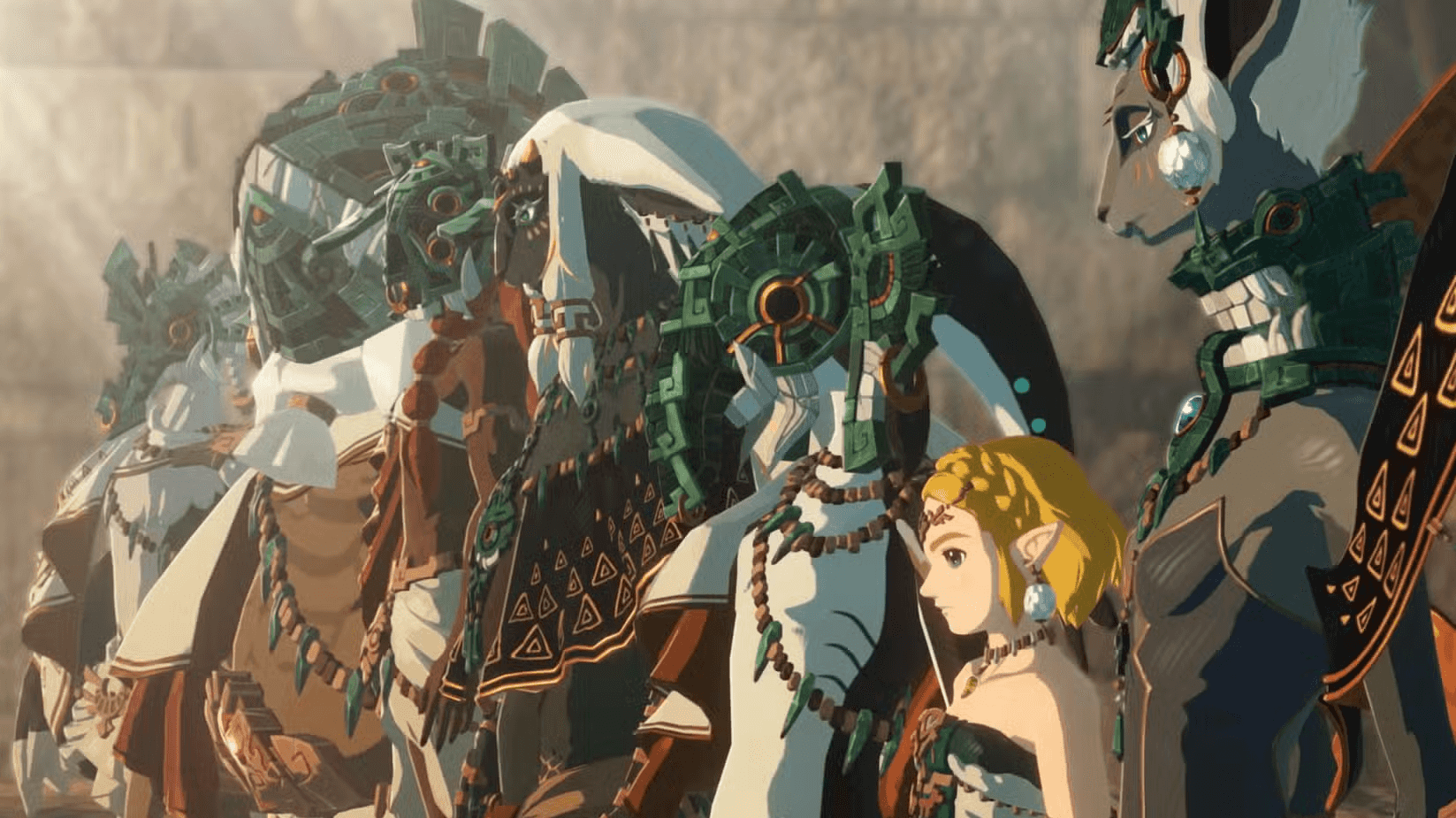
The main cast—Zelda, Rauru, the Construct, and the Sages—are all solid. They carry the story and generally feel well integrated into the gameplay.
But outside of them, the roster feels weak. A lot of the additional characters come across as uninspired and forgettable, serving more as filler than meaningful additions. There’s very little that makes them stand out, either narratively or mechanically.
That said, one notable exception is Calamo, an original character introduced for this game. Even if his arc is predictable, it still lands emotionally. His story stands out as one of the few genuinely engaging and well-paced parts of the narrative, and arguably one of the highlights of the entire game.
Progression & Endgame Problems
This is where the game really starts to lose me.
Progression feels unnecessarily restrictive. Even after completing 100% of the stages, I couldn’t fully max out a single weapon—despite not even upgrading excessively. Inventory space feels tight, farming is slow, and overall progression feels artificially stretched rather than naturally paced.
It gives the impression that systems are designed to extend playtime rather than reward engagement in a satisfying way.
Then there’s the post-game—or rather, the lack of one.
Once the main story is finished, there’s almost nothing meaningful left. No secret characters, no substantial unlocks, no major hidden content. Just repetition for the sake of completion percentage.
The character-specific questlines are especially frustrating. They unlock in strict sequence, forcing repetitive use of the same characters in multiple battles just to progress. And the reward? Usually just a short, text-only conversation with no voice acting and no cinematic presentation—something that feels flat and underwhelming compared to what you’d expect from a Zelda-adjacent title.
Even worse, the so-called “100% ending” is extremely disappointing. After investing dozens of hours, it amounts to a brief acknowledgment from Lenalia followed by credits over a very basic background animation. It feels underwhelming to the point of being almost ironic.
Final Thoughts
Despite all of that criticism, I still enjoyed Age of Imprisonment.
The gameplay is solid, the performance is excellent, and the core combat loop is genuinely fun. It’s the kind of game that doesn’t demand perfection from every system to still be enjoyable to pick up and play.
But at the same time, it feels like a game that either ran out of time or ambition in its final execution. The foundation is strong, but many of the surrounding systems—story structure, progression, and endgame content—feel underdeveloped or unnecessarily padded.
An enjoyable, technically impressive Warriors-style game set in the Zelda universe, held back by a weak endgame, underwhelming rewards, and a story that never fully capitalizes on its own potential.
Still, it’s fun—and at the end of the day, that’s why I’ll keep coming back to it from time to time.