Tales of Berseria is a curious beast. On one hand, it’s a vibrant and emotionally charged RPG with a rich lore that immediately draws you in. The Holy Midgand Empire and its surrounding regions feel alive, original, and full of intrigue, from the intricate political structures to the mysterious, morally gray forces at play. For someone who enjoys delving into the universe of a game as much as the gameplay itself, Berseria succeeds in sparking genuine curiosity.
The story kicks off at a compelling pace. Velvet Crowe’s journey of vengeance is immediately gripping, and the first act has a tension and motivation that make you feel like you’re riding a wave of purpose. Yet, as the hours pile on, the narrative pacing starts to waver. The motivation to press forward never fully disappears, but it becomes increasingly dependent on sheer curiosity rather than momentum built through gameplay. This is where Berseria’s tension between story and mechanics begins to show.
Combat, unfortunately, is where this tension becomes most evident. The “Liberation-LMBS” system is an ambitious hybrid, trying to be a hack-and-slash experience, a strategic RPG with elemental weaknesses, accessories, and passive skills, and something in between. The result is… slightly confusing. I enjoyed experimenting with the systems, testing builds and chaining Mystic Artes, but the game never really demands mastery. Battles lack either the difficulty to push you to explore its depths or the fluidity to make fast-paced action genuinely thrilling. By the mid-game, I found myself avoiding the majority of encounters, reducing gameplay to a loop of dodging, looting chests, and advancing to the next story beat. It’s functional, and it works as a playable loop—but not for the 60-hour investment the game asks of you.
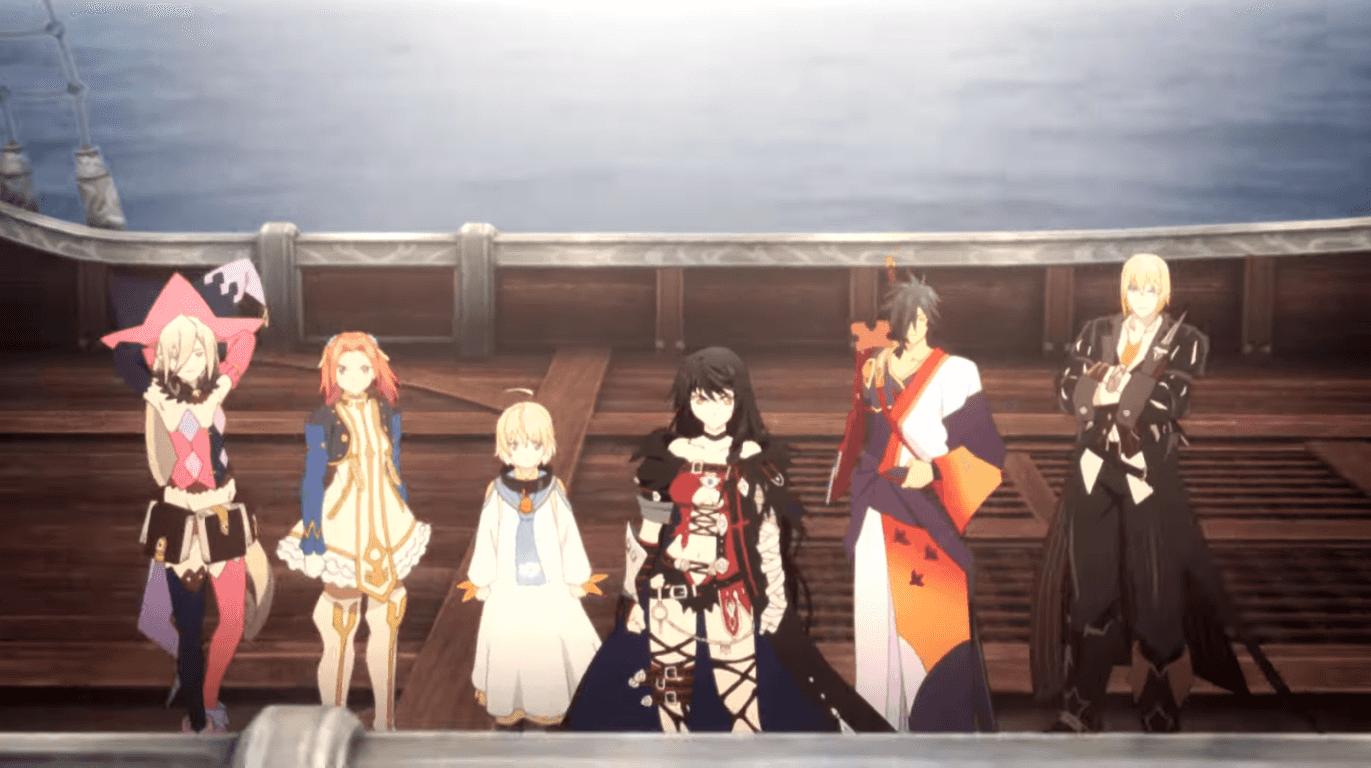
The cast of companions is a shining light in Berseria’s world. Each has a distinct personality, clear motivations, and memorable quirks that make them feel lived-in. Ironically, the protagonist Velvet herself is the weakest link in the cast for much of the journey. Her development is stunted, remaining frustratingly one-dimensional until the final 20% of the game. It’s a rare experience to find yourself more invested in your companions than in the character you’re actually controlling.
Exploration walks a fine line. The world is linear by design, but the implementation is competent. Detours to open chests are initially rewarding, encouraging exploration, but after dozens of repetitions, they begin to feel like a hamster wheel, mere padding for playtime with minimal reward. A little restraint in these diversions would have made the journey feel sharper and more focused.
Graphically, Berseria is competent rather than groundbreaking. Cutscenes are beautiful, and the use of oversized character avatars during dialogue is both economical and elegant, subtly enhancing emotional connection with the companions. The soundtrack is serviceable, punctuated by a few genuinely excellent tracks—most notably the inspirational, stirring theme preceding the final battle.
And then there’s the ending. Despite the game’s pacing and mechanical issues, Berseria’s conclusion is a masterpiece of emotional resonance. It defies expectations, delivers genuine weight, and lingers in your memory long after the credits roll. It’s heartbreaking that fewer than 20% of players ever reach it without feeling fatigued. In many ways, the ending redeems the journey, showing what the game could have been if its length were trimmed and its systems more focused.
Tales of Berseria is a game of contrasts: rich worldbuilding and moving narrative versus convoluted combat and padded length. For the lore-hungry, story-driven player, it’s worth the slog. Ultimately, I loved the journey, but I can’t shake the feeling that the experience would have been far stronger at half the length—leaner, sharper, and as emotionally devastating as its finale.