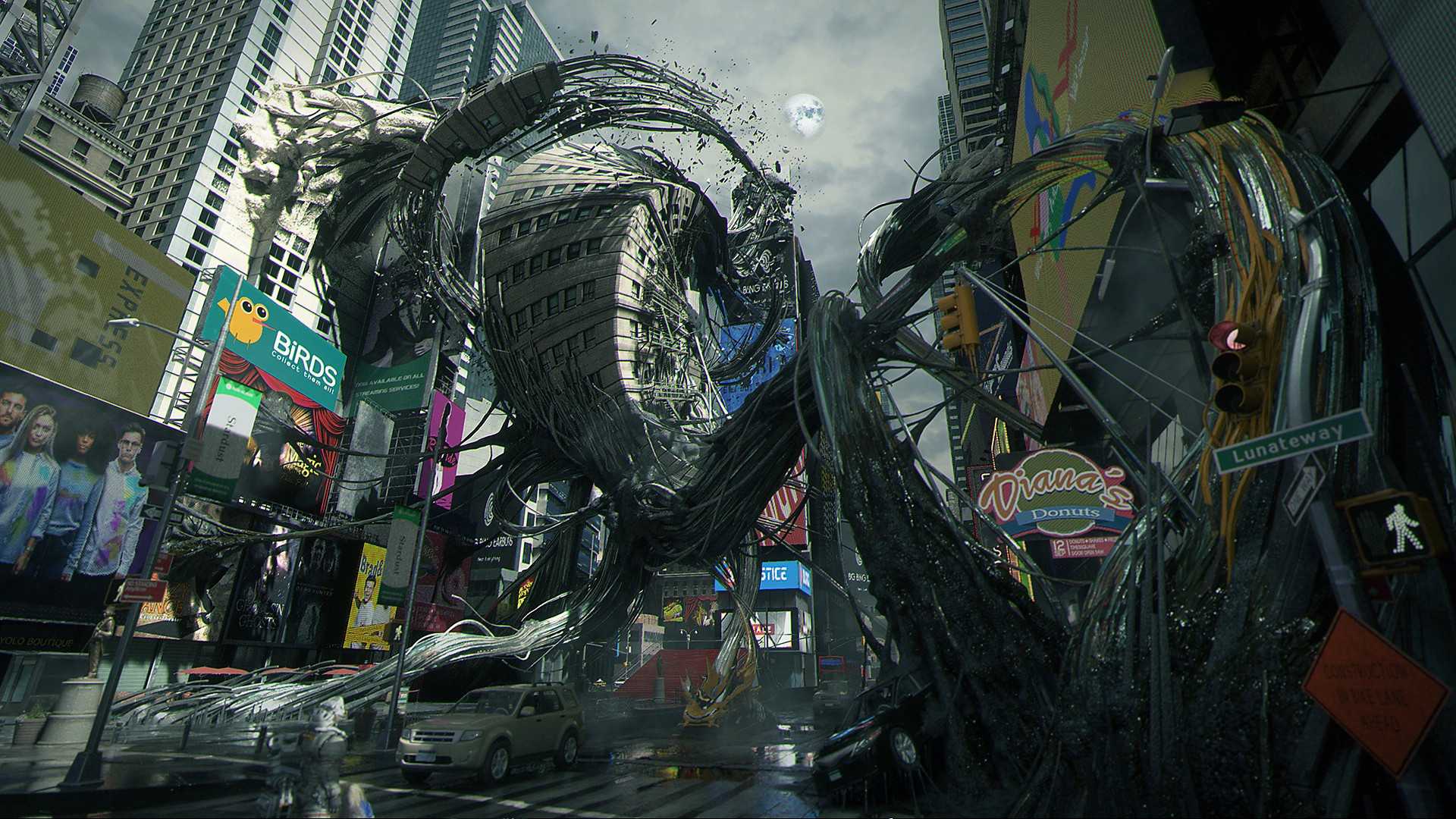
Pragmata was a pleasant surprise. I hadn’t planned on playing it at all, but it came to me as a gift, and sometimes that is the best way to discover a game: without expectations, without hype, and without the pressure of having decided in advance what it should be. What I found was a short, focused, and solid experience that entertained me far more than I expected.
The story does what it needs to do. It is not the main reason to play Pragmata, but it gives the adventure enough context, mystery, and intrigue to keep things moving. There is just enough narrative weight to make the world feel interesting and to give the journey a sense of purpose. It never tries to overwhelm you with exposition, and honestly, it does not need to. The real heart of the game is somewhere else entirely: the gameplay.
That said, there was one emotional element that never fully clicked for me: the father-daughter dynamic the game tries to build between Hugh and Diana. I understood what the story was going for, but I was always aware that Diana was a robot, and that created a certain distance I could never quite overcome. At times, it felt a little like being asked to develop deep feelings for ChatGPT. The game would have worked just as well for me if Diana had been something closer to R2-D2; in fact, I might have liked that even more, because it would have felt more honest about what the relationship actually was.
Because of that, and without getting into spoilers, I liked the ending a lot in concept, but I did not really feel it emotionally. It made sense, it was well handled, and I appreciated what it was trying to say, but it did not hit me the way I think the game wanted it to. For me, the emotional side of Pragmata was more interesting as an idea than as something I truly connected with.
Where Pragmata truly shines is in its gameplay.
The combination of shooting and hacking works wonderfully, with a fast-paced, entertaining, and constantly satisfying dynamic. It’s a game that understands its rhythm very well: it keeps you active, forces you to pay attention, and manages to make each encounter have that small tactical element that makes it more interesting than simply shooting.
The progression also stands out. The abilities, upgrades, and weapons are very well chosen. There’s enough variety to make you feel like you’re growing and expanding your possibilities, but not so much that every change feels like it’s taking you into a completely different system. That matters, because it prevents experimenting with new tools from feeling like a chore. Everything feels connected, natural, and useful within the same gameplay core.
The enemies have just the right amount of variety, and the environments are well defined and well presented. They never become tiring or repetitive, partly because the game maintains a very dynamic pace and doesn’t drag on longer than necessary. On top of that, returning to earlier maps once you’re more powerful feels especially rewarding. I replayed some areas precisely for that reason: because coming back with more abilities and mastering spaces that once felt more demanding is always very satisfying.
In the end, I finished the story, although I wasn’t even close to completing everything. And even so, I was satisfied. Pragmata left me with a feeling similar to that of a good meal: I don’t need more, because insisting too much could ruin the good taste it left behind.
In short, it’s a well-rounded experience: brief, entertaining, well paced, and with gameplay strong enough to carry it from beginning to end.